Showing posts with label ID's. Show all posts

17 February 2009

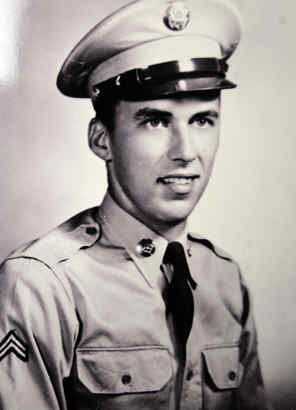
Soldier Missing In Action From The Korean War Is Identified

US Department of Defense - Washington, DC

U.S. Department of Defense
Office of the Assistant Secretary of Defense (Public Affairs)
News Release


IMMEDIATE RELEASE
No. 101-09
February 17, 2009

Soldier Missing in Action From the Korean War is Identified


The Department of Defense POW/Missing Personnel Office (DPMO) announced today that the remains of a U.S. serviceman, missing in action from the Korean War, have been identified and will be returned to his family for burial with full military honors.

He is Sgt. Stanley E. Baylor, U.S. Army, of Webster, N.Y. His funeral will be held on Aug. 1 in Warsaw, N.Y.

Representatives from the Army’s Mortuary Office met with Baylor’s next-of-kin to explain the recovery and identification process, and to coordinate interment with military honors on behalf of the secretary of the Army.

Baylor was assigned to Company L, 3rd Battalion, 8th Cavalry Regiment, 1st Cavalry Division. On Nov. 1, 1950, the 8th Cavalry was occupying a defensive position near Unsan, North Korea, in an area known as the “Camel’s Head,” when elements of two Chinese Communist Forces divisions struck the 1st Cavalry Division’s lines, collapsing the perimeter and forcing a withdrawal. The 3rd Battalion was surrounded and effectively ceased to exist as a fighting unit. Baylor was reported missing on Nov. 2, 1950, and was one of the more than 350 servicemen unaccounted-for from the battle at Unsan.

Between 1991-94, North Korea gave the U.S. 208 boxes of remains believed to contain the remains of 200-400 U.S. servicemen. Accompanying North Korean documents indicated that some of the remains were exhumed near Chonsung-Ri, Unsan County. This location correlates with Baylor’s last known location.

Among other forensic identification tools and circumstantial evidence, scientists from the Joint POW/MIA Accounting Command and the Armed Forces DNA Identification Laboratory also used mitochondrial DNA and dental comparisons in the identification of Baylor’s remains, which were turned over in 1993.

For additional information on the Defense Department’s mission to account for missing Americans, visit the DPMO Web site at http://www.dtic.mil/dpmo or call (703) 699-1169.

23 January 2009

Missing WWII Soldiers Are Identified


U.S. Department of Defense
Office of the Assistant Secretary of Defense (Public Affairs)
News Release

IMMEDIATE RELEASE No. 052-09
January 23, 2009

Missing WWII Soldiers are Identified


The Department of Defense POW/Missing Personnel Office (DPMO) announced today that the remains of two U.S. servicemen, missing from World War II, have been identified and will be returned to their families for burial with full military honors.

They are Pfc. Julian H. Rogers, of Bloomington, Ind, and Pvt. Henry E. Marquez, of Kansas City, Kan. Both men were U.S. Army. Rogers will be buried in the spring in Arlington National Cemetery near Washington, D.C., and Marquez will be buried on May 30 in Kansas City, Mo.

Representatives from the Army’s Mortuary Office met with the next-of-kin of these men in their hometowns to explain the recovery and identification process and to coordinate interment with military honors on behalf of the Secretary of the Army.

In November 1944, the 112th Infantry Regiment, 28th Infantry Division, was attacking east through the Hürtgen Forest in an attempt to capture the German towns of Vossenack and Schmidt. On Nov. 4, the Germans counterattacked in what would become one of the longest running battles in U.S. history. Rogers and Marquez, both members of G Company, 112th Infantry Regiment, were reported killed in action near Vossenack on Nov. 4. Their bodies were not recovered.

In 2007, a German citizen searching for wartime relics in the Hürtgen Forest uncovered human remains and military identification tags for Rogers and Marquez. He notified U.S. officials and a Joint POW/MIA Accounting Command (JPAC) team excavated the site later that year. The team recovered human remains and non-biological material.

Among dental records, other forensic identification tools and circumstantial evidence, scientists from JPAC and the Armed Forces DNA Identification Laboratory also used mitochondrial DNA in the identification of the remains.

For additional information on the Defense Department’s mission to account for missing Americans, visit the DPMO Web site at http://www.dtic.mil/dpmo or call (703) 699-1420.

17 January 2009

Funeral Set For WWII Vet Years After Disappearance

CharlotteObserver.com - Charlotte, NC, USA

The Associated Press
Posted: Saturday, Jan. 17, 2009

CHARLESTON, S.C. A World War II veteran who disappeared over the Pacific Ocean 65 years ago will be laid to rest Sunday in his native South Carolina.

Maj. Marion Ryan McCown Jr. will be buried after a memorial service at the Unitarian Church in Charleston.

The Post & Courier of Charleston reported Saturday that the Marines Corps is giving McCown a full military burial, including a fly over by F-18 Hornets.

"I'm expecting a full church," Mike McDaniel, funeral director at Stuhr's West Ashley funeral home, said. "This is a hero coming home."

McCown was a Marine aviator stationed in the Pacific during the war. He had been missing since Jan. 20, 1944, when he volunteered to escort a bombing mission in his Corsair F-4U.

Last year, a Joint Prisoners of War/Missing in Action Accounting Command team found his plane and remains in New Guinea.

Born in the South Carolina Lowcountry in 1917, McCown was a licensed pilot and a student at Georgia Tech when he enlisted after the war began.

His nephew, John Almeida, and a few other family members plan to attend Sunday's service. Almeida said he feared there were few people living who knew his uncle.

McDaniel said he has heard from a number of veterans, including one man who said he was saved by McCown's fighter squadron during the war.

14 January 2009

Soldier's Remains Finally Headed Home

Elmira Star-Gazette - Elmira, NY, USA

Elmira Heights Army sergeant reported missing in Korean War

By Roger Neumann • rneumann@gannett.com • January 14, 2009

After more than 58 years, the three sisters of a soldier from Elmira Heights who was killed in the Korean War will get to bury the remains of their brother.

The women were notified recently by the Department of Defense that DNA testing had identified the remains of Army Sgt. Dougall Espey Jr. He was reported missing, along with more than 300 others from his unit, on Nov. 2, 1950, after days of fierce fighting with Chinese forces near Unsan, North Korea.

Now the sisters are completing plans for Sgt. Espey's burial, with full military honors, at Woodlawn National Cemetery in Elmira. He'll be laid to rest April 3, which would have been his 80th birthday.

"We've waited so long for this, never thinking that it would ever happen," one of the sisters, Margaret "Peggy" Stowell of Elmira, said Tuesday.

The young soldier, known as Sonny to family and friends, was a corporal when he went off to war. He was 21 when he died, and he was posthumously promoted to sergeant.

On the day before Thanksgiving in 1950, the family was informed that he was missing in action when a young rider on a bicycle pulled up to the Espey home on McCanns Boulevard in Elmira Heights and handed over a telegram.

"I heard this terrible screaming," Mariam "Bobbie" Espey, now of Mount Laurel, N.J., recalled in 2000. "I came downstairs, and my mother was hysterical. My father was crying, holding this paper in his hand."

It wasn't until Dec. 31, 1953, that the Army officially declared the soldier dead. And it was only a few months ago, on Sept. 27, that the family was notified that his remains had been identified from among those of hundreds of others that were turned over by North Korea from 1991 to 1994.

Over the years, the family - especially Bobbie Espey and her father, Dougall Sr. - tried to learn more about Sgt. Espey's fate. She also worked with other families of those missing in action and, inspired by her brother, became an Air Force nurse.

The elder Espey and his wife, Agnes, have since died, both in their 80s.

"My parents never got over it," said Peggy Stowell. "He was their only son, and he was loved by all."

Said Bobbie Espey: "I'm sure they're up there looking down."

Stowell said the sisters are just glad the news of their brother came while they are still alive. Espey is 78 now, Stowell is 73 and a third sister, Kathleen McMahon of Elmira, is 68.

"We're all up there in years," Stowell said. "We were just hoping that some day we'd hear."

13 January 2009

Lost In Korea, Soldier Will Rest In Peace

Philadelphia Inquirer - Philadelphia, PA, USA

After a 1950 battle, Sgt. Dougall H. Espey Jr. was gone, but not forgotten.

By Matt Katz
Inquirer Staff Writer

Fifty-eight years is a long time to wait for a phone call.

"I was kind of numb," said Mariam "Bobbie" Espey of Mount Laurel. "It came out of the blue."

It was Sept. 27 when a Pentagon official told Espey that the remains of her big brother, Army Sgt. Dougall H. Espey Jr., who was reported missing in action in Korea in November 1950, had been identified following DNA tests on hundreds of soldiers' remains.

Almost four months after that call, the identification was announced publicly yesterday by the U.S. Department of Defense.

"I was afraid I would die before it ever happened," said Espey, 78, a retired guidance counselor at John Hancock School in Philadelphia.

A doting little sister, Espey spent decades making sure her only brother rested in peace.

In 1976, she took over her father's duty of constantly contacting the military. "He said there's nothing I can do," Espey recalled.

About 10 years ago, she responded to an ad in a military magazine asking for blood samples so scientists could do mitochondrial DNA tests on remains collected in 208 boxes turned over by North Korea.

Mariam Espey, who also served in the Korean War as part of the Air Force Nurse Corps, mailed in blood. So did one of her two younger sisters.

The family heard nothing until the phone call. The young sergeant - 6-foot-5, exceedingly kind, and just 21 at the time of his death - had been identified.

In November, a military official came to Espey's home and handed her a box with two dog tags recovered from Korea.

"It was strange," she said. "The funeral will be more emotional, probably."

On April 3, Espey will do her final duty. Along with her sisters, she will bury their brother, on what would have been his 80th birthday, at Woodlawn National Cemetery in Elmira, N.Y., where the family lived at the time of his death.

The remains will be put in a flag-draped coffin and flown, with a military escort, from the Central Identification Laboratory at Hickam Air Force Base, Hawaii, to upstate New York.

Of the 200 to 400 servicemen's remains that are estimated to have been collected in the 208 boxes handed over by North Korea in the early 1990s, only 24 have been identified, according to the military.

Espey said she knew of some family members who did not want to reopen emotional wounds by offering their blood for DNA comparisons.

"That's a shame, because the relative deserves closure, the relative deserves to be buried properly," she said.

Larry Greer, spokesman for the Department of Defense POW/Missing Personnel Office, said each box from North Korea contained the bone and teeth remains of as few as one, or as many as seven, soldiers.

"They were so commingled by the North Koreans, it's taking years to get to the bottom of each case and try to identify them," Greer said.

Dougall Espey trained at Fort Dix, but lived in Elmira. His little sister is a former Mount Laurel school board member who has lived on Church Road since 1972.

She was just a year younger than her brother, and she said they were "more companions" than siblings.

"We lived in apartments and my parents moved a lot, and we never stayed long enough in one place to establish any friends, so we had each other," she said.

Her brother was in North Korea for just two months.

On Nov. 1, 1950, at a battle near Unsan in an area known as "Camel's Head," Chinese forces surrounded Espy's battalion, according to Greer. After the battle, more than 350 soldiers could not be accounted for.

"The government in their utter wisdom sent us the telegram [saying he was missing] the day before Thanksgiving in 1950," Espey said, bitterness in her voice.

He was declared dead on New Year's Eve in 1953. More than a half-century after that, he will come home from the war.

"I'm happy it finally happened," his sister said. "That's why I did it."

Soldier Missing In Action From Korean War Is Identified


U.S. Department of Defense
Office of the Assistant Secretary of Defense (Public Affairs)
News Release


IMMEDIATE RELEASE No. 021-09
January 12, 2009

Soldier Missing in Action From Korean War is Identified


The Department of Defense POW/Missing Personnel Office announced today that the remains of a U.S. serviceman, missing in action from the Korean War, have been identified and will be returned to his family for burial with full military honors.

He is Sgt. Dougall H. Espey Jr., U.S. Army, of Mount Laurel, N.J. He will be buried April 3 in Elmira, N.Y.

Representatives from the Army’s Mortuary Office met with Espey’s next-of-kin to explain the recovery and identification process on behalf of the secretary of the Army.

Espey was assigned to Company L, 3rd Battalion, 8th Cavalry Regiment, 1st Cavalry Division. On Nov. 1, 1950, the 8th Cavalry was occupying a defensive position near Unsan, North Korea, in an area known as the “Camel’s Head,” when elements of two Chinese Communist Forces divisions struck the 1st Cavalry Division’s lines, collapsing the perimeter and forcing a withdrawal. The 3rd Battalion was surrounded and effectively ceased to exist as a fighting unit. Espey was one of the more than 350 servicemen unaccounted-for from the battle at Unsan.

Between 1991-94, North Korea turned over to the U.S. 208 boxes of remains believed to contain the remains of 200-400 U.S. servicemen. North Korean documents turned over with several boxes in 1993 indicated that the remains from those boxes were exhumed near Chonsung-Ri, Unsan County. This location correlates with Espey’s last known location.

Among other forensic identification tools and circumstantial evidence, scientists from the Joint POW/MIA Accounting Command and the Armed Forces DNA Identification Laboratory also used mitochondrial DNA and dental comparisons in the identification of the remains.

For additional information on the Defense Department’s mission to account for missing Americans, visit the DPMO Web site at http://www.dtic.mil/dpmo or call (703) 699-1169.

20 December 2008

Remains Of World War II Marine From SC Identified

Columbus Ledger-Enquirer - Columbus, GA, USA

Posted on Fri, Dec. 19, 2008

By SEANNA ADCOX - Associated Press Writer

COLUMBIA, S.C. --The burial next month of Maj. Marion Ryan McCown Jr. in a family plot in Charleston, nearly 65 years after his plane went down in the South Pacific, brings relief and joy to a family who never thought his remains would be found, his relatives said Friday.

The Marine pilot had been missing since Jan. 20, 1944, when his single-seat F-4U Corsair failed to return from a combat mission over the island of New Britain, in Papua New Guinea. His remains were recovered from a crash site in the town of Rabaul, where the Japanese had a base, and identified earlier this year, the Defense Department's POW/Missing Personnel Office announced Friday.

"It's such a comfort. All of us just assumed he was lost at sea and would never be found, and it was going to be an unanswered question," said Jane McKinney, of Channel Islands, Calif., who was three months old when her half-brother went missing.

McCown was 27 when, on a bomber escort, his squadron tangled with 40 Japanese Zero fighter planes, said his nephew, Capt. John Almeida, a retired Navy doctor in Jacksonville, N.C.
Almeida has the flight log the Marine Corps sent his mother in the 1950s.

"It must've been a heckofa fight. His squadron lost three pilots out of 11," he said.

As for finding his uncle, "I'd given up years ago," said Almeida, 63, who was a Marine in Vietnam before serving 24 years in the Navy Medical Corps.

McCown, who left Georgia Tech for the Marines in 1942, will be buried with military honors Jan. 18 - four days after he would have turned 92 - beside his mother, sister, and grandparents at The Unitarian Church cemetery in Charleston.

Family members say the service will be a joyous occasion that will bring together relatives who are scattered across the country.

"It's going to be a fantastic trip," Almeida said. "It's opened up a whole new world I didn't know about."

That includes meeting Helen Schiller, 87, of Summerville, who was McCown's girlfriend.
"He wanted the Marines, and he wanted to fly," Schiller said.

She recalled him taking her to dinner in his dress whites whenever he came home from training in Cherry Point, N.C. She still has a box with wings he sent her before he vanished.

"Boy, I'll tell you, he was a sharp one. He was the perfect gentleman, like the old Charlestonians. He was really, really a nice fella," said the former Helen Miller of Charleston. On his identification, she added, "It was the biggest surprise in the world. Nobody knew what had happened to him."

Unbeknownst to the family, a POW/MIA team recovered McCown's identification tag and bone fragments from the South Pacific crash site in 1991, but forensic science could not identify the remains then. In 2006, when a team returned to prepare the site for recovery, a partial parachute was found, and a local villager handed over remains he said he took from the site. More remains and the wreckage were recovered last spring. Dental comparisons and other forensic and circumstantial evidence led to the identification, the Defense Department said.

Not wanting to make mistakes, the military won't identify remains based on "dog tags, because anything can happen in war," Almeida said.

In May, as remains were unearthed, McKinney and her family were vacationing in the South Pacific. Thinking French Polynesia, more than 4,000 miles from the site, was the closest she'd ever get to her brother, McKinney tossed flowers into the ocean.

It wasn't until August, when an Internet search by a McKinney friend turned up information on the excavation, that the family connected with the military. Because of his military background, Almeida was asked to make the call. "We've been looking for you," he recalled the head of the POW/MIA office saying.

"It was very exciting. We kinda felt like the sadness was long over," McKinney said. She's thankful "there are people who have just not given up finding these remains.

"We knew we weren't going to get him back. But it's been such a comfort and such a mark of respect for him and his sacrifice."

But one thing still haunts family members, said McCown's 41-year-old niece Blair McKinney. While they're grateful and understand the military can't make a conclusive identification with dog tags, they don't like to think of the 1991 find.

"The only heart-wrenching part of it as the family ... is that his two other siblings were alive in the '90s and went to their graves not knowing anything," Blair McKinney said.

The Raleigh, N.C., resident is reading her uncle's five-year diary now. She's touched by his last entry, written in 1942, when he was stationed in Quantico, Va.

"What a beautiful place," he wrote. "I might want to settle here when the war is over."

19 December 2008

After 40 Years, Kentucky Serviceman Is Buried

Louisville Courier-Journal - Louisville, KY, USA

Family: Dad 'was a hero'

By James R. Carroll • jcarroll@courier-journal.com
December 19, 2008

ARLINGTON, Va. -- As the band and honor guard marched away yesterday morning, Russell McElroy of Bowling Green, Ky., approached the casket containing the remains of his father and five other missing servicemen.

He placed a Bible on top of the silver casket, then put his hand on the Bible.

In his other hand, McElroy held the American flag he was presented in honor of his father, U.S. Air Force Maj. John McElroy of Eminence, Ky., who was buried with full honors in Arlington National Cemetery yesterday -- 40 years after he died in Vietnam.

"That was my grandfather's Bible," Russell McElroy said in an interview later. "I thought that was fitting to have my grandfather's Bible next to the casket. And I said a little prayer."

Maj. McElroy and his five companions were killed when their C-130 Hercules was shot down May 12, 1968, during operations evacuating Vietnamese civilians from the Kham Duc Special Forces Camp near Da Nang in what was then South Vietnam.

Most of their more than 150 passengers were women and children. None survived.

The American servicemen, listed as missing, were identified after their remains were recovered in 1993 and 1994. It took years of DNA testing and confirmation before authorities were ready to proceed with the burial.

McElroy's remains were buried in a single casket with those of Air Force Major Bernard Bucher, of Eureka, Ill.; Air Force 1st Lt. Stephen Moreland, of Los Angeles; Air Force Staff Sgt. Frank Hepler, of Glenside, Pa.; Air Force Airman 1st Class George Long, of Medicine, Kan.; and Army Capt. Warren Orr Jr., of Kewanee, Ill.

The remains were so comingled that there was no way to bury them separately, officials said.

But Orr also was buried in a second casket, because enough of his remains were uniquely identified to warrant a separate burial, according to Air Force Capt. Mary Olsen, spokeswoman for the Pentagon's POW/MIA Office.

Russell McElroy, 53, a probation and parole officer with the Kentucky Department of Corrections, was at Arlington for the first time.

"I was honored that my dad was placed in Arlington," he said. "As I looked around and saw all other tombstones, I thought he had done his duty to his country, and we were proud of him. He was a hero to us and a wonderful dad. Even though things turned out as they did, we have been truly blessed."

His sister, Mary McElroy Tucker, 51, of Louisville, said she was moved by the military service, with the Air Force Band, Army and Air Force honor guards, a firing party that provided a 21-gun salute and a bugler who played "Taps."

"I'm very grateful to my country," she said.

Air Force Reserve Chaplain Lt. Col. Karis Graham and Army Chaplain Maj. Stanton Trotter conducted the services.

Graham read from John Gillespie Magee Jr.'s poem, "High Flight," which begins: "Oh! I have slipped the surly bonds of Earth. …"

After the flags were removed from the caskets, a representative from each family was given a flag, folded in the military triangle, by Maj. Gen. Lawrence A. Stutzriem, director and chief of staff of the Air Force Strategic Studies Group -- CHECKMATE.

Mary Tucker had placed in the casket an Irish box containing soil from the Lexington, Ky., cemetery where there is a plaque with her father's name, as well as soil from Maj. McElroy's parents' grave. She also put in a lock of her hair.

Russell McElroy put his father's Bible into the casket, along with a picture of his mother, Regina, who died four years ago, and a lock of his father's hair from his first haircut.

Mary Tucker said her father's death 40 years ago, along with those of Robert F. Kennedy, Dr. Martin Luther King Jr. and Catholic writer Thomas Merton, profoundly affected the direction of her life.

Now a nurse practitioner, "my mission is to heal and not to kill," she said. She added that she hoped President-elect Barack Obama would create a "Department of Peace" in his administration.

Linda McElroy Stearnes, 49, of Brownsville, Ky., said the family had been waiting 40 years for proper honors to be given to her father and the other men.

"Back in 1968, we didn't feel like we should talk about it," she said. "If you talked about it much, it was kind of like, 'Your daddy was a baby-killer.' "

But Stearnes, who works for the Edmonson County School District, believes her father and the other servicemen on the plane "did die heroes."

"They were evacuating the village. It was a rescue mission. Truly, those guys knew when they were going in it was a very, very dangerous situation. They knew they might not come back out, and they did it anyway."

"I'm glad after 40 years … they got recognition," she said.

Reporter James R. Carroll can be reached at (202) 906-8141.

18 December 2008

Arlington Burial Closes Chapter On Missing Soldier

OCRegister - Santa Ana, CA, USA

Thursday, December 18, 2008

A Santa Ana father sees his son laid to rest at the national cemetery, forty years after he died in a plane crash in South Vietnam.

By DOUG IRVING
The Orange County Register

SANTA ANA – Warren Orr Sr. saw his son buried with the solemn dignity of a military funeral this morning after 40 years of uncertainty that began with a plane crash in South Vietnam.

The elder Orr had never really doubted that his son, a young Army officer named Warren Jr., had died on that plane. But it wasn't until a team of investigators found old watches, dog tags and pieces of bone at the crash site that he knew for sure.

The Pentagon announced last year that it had identified the remains of Warren Jr. and other U.S. servicemen who had been listed as missing in action since the Vietnam War. They were buried this morning at Arlington National Cemetery in Virginia.

"I get to lay him to rest in his own country now," Orr Sr., now 87 years old and living in Santa Ana, told NBC News. "I'm very proud of him. He was quite a man."

Capt. Warren Orr Jr. was a career soldier who had volunteered to go to Vietnam and had just turned 25 there. He wrote home in May 1968 that he was on his way to a small base in South Vietnam, to help evacuate the families of South Vietnamese fighters.

It was the last letter his father received from him.

On May 12, 1968, a military transport plane loaded with evacuees thundered down a remote airstrip near Da Nang. It came under heavy fire, exploded, and then crashed into a hillside.

Witnesses had seen Capt. Orr loading people onto the plane just before it left, but no Americans had actually seen him get on. An investigation in 1969 determined that he "could have sought cover from the mortar fire and become separated or he could have boarded the aircraft."

It concluded: "Fate unknown."

"I knew he was on that plane," his father told the Orange County Register in an interview last year. "In my heart, I was positive he was on that plane."

An officer with the Army's Past Conflict Repatriations Branch visited the elder Orr last September. The officer delivered a spiral-bound notebook that laid out the evidence to prove, finally, that Orr Jr. had died in that plane crash.

Two pieces of leg bone found at the crash site had yielded enough DNA to make a positive identification.

Orr Sr. kept his son's Army portrait hanging in the living room, above a small table with a case full of medals. He slipped his son's recovered dog tag into the corner of the portrait frame.

"There's always been that faint hope flickering," Orr Sr. said last year. "Now that they're going to have a funeral, why, I can have closure, and know that he's in peace."

The Associated Press contributed to this report.

Contact the writer: 714-704-3777 or dirving@ocregister.com

15 December 2008

Funeral Set For Missing Soldier

Janesville Gazette - Janesville, WI, USA

BY ANN MARIE AMES
Monday, Dec. 15, 2008

JACKSONVILLE, Fla. — A Janesville family this week will put to rest a relative they've never met but have held dear for decades.

Randy Grutza and his children will go to Milwaukee to attend Grutza's uncle's funeral. The uncle, U.S. Army Cpl. Richard Grutza, was a gunner in a B-25 bomber shot down in Papua, New Guinea, during World War II.

A visitation is planned for 10 a.m. Wednesday at St. Adalbert Cemetery Chapel, 3801 S. 6th St., Milwaukee. Burial with military honors will follow at 11 a.m.

Grutza never knew his uncle, a Milwaukee native killed Dec. 5, 1942.

"All we had were my dad's memories," Randy said.

But he is excited to go to the funeral. Randy said the event will be especially interesting for his 11-year-old son, who recently went with his class to the Wisconsin Veterans Museum in Madison. Randy said he chaperoned the trip and told the kids about his uncle who was missing in action for almost 66 years.

Richard Grutza's remains—five bones—were escorted Saturday to Milwaukee, Randy said. He was disappointed that he was not notified ahead of time of the full military escort his uncle got to come home to Milwaukee.

Cpl. Richard Grutza was one of seven on the plane that crashed into a mountainside. The bombs on the plane left a crater that filled with water, preventing army personnel from recovering the bodies, Grutza said.

Finally, in 2005, the U.S. Army contacted Randy Grutza's father, Harry Grutza, and asked for a DNA sample. Even when the test was inconclusive, Randy said Harry "knew in his heart" his brother Richard's remains had been found.

"He was very excited about it, even when they didn't have confirmation," Randy said.

But the family had to keep waiting until September, when Richard Grutza's remains were finally identified after being compared to his still-living sister's DNA. Harry Grutza died in 2006.

The brothers were very close, Randy said. Richard enlisted at age 19 the day after the attack on Pearl Harbor. A year later, Harry joined the Coast Guard.

"Unfortunately he couldn't be here to see his brother come home," Grutza said.

Servicemen MIA From Vietnam War Are Identified


U.S. Department of Defense
Office of the Assistant Secretary of Defense (Public Affiars)


IMMEDIATE RELEASE No. 1015-08
December 15, 2008


Servicemen MIA From Vietnam War are Identified


The Department of Defense POW/Missing Personnel Office (DPMO) announced today that the group remains of six U.S. servicemen, missing from the Vietnam War, are soon to be buried with full military honors.

They are Maj. Bernard L. Bucher, of Eureka, Ill.; Maj. John L. McElroy, of Eminence, Ky.; 1st Lt. Stephen C. Moreland, of Los Angeles; and Staff Sgt. Frank M. Hepler, of Glenside, Pa., all U.S. Air Force. These men will be buried as a group on Dec. 18 in Arlington National Cemetery near Washington, D.C.

Two other servicemen, who were individually identified in October 2007, are also represented in this group. They are Capt. Warren R. Orr Jr., U.S. Army, of Kewanee, Ill., and Airman 1st Class George W. Long, U.S. Air Force, of Medicine, Kan.

Representatives from the Air Force and the Army mortuary offices met with the next-of-kin of these men to explain the recovery and identification process and to coordinate interment with military honors on behalf of the secretary of the Air Force and the secretary of the Army.

On May 12, 1968, these men were on board a C-130 Hercules evacuating Vietnamese citizens from the Kham Duc Special Forces Camp near Da Nang, South Vietnam. While taking off, the crew reported taking heavy enemy ground fire. A forward air controller flying in the area reported seeing the plane explode in mid-air soon after leaving the runway.

In 1986 and 1991, U.S. officials received remains and identification tags from sources claiming they belonged to men from this incident. Scientific analysis revealed they were not American remains, but it was believed the Vietnamese sources knew where the crash site was located.

In 1993, a joint/U.S.-Socialist Republic of Vietnam (SRV) team, led by the Joint POW/MIA Accounting Command (JPAC), traveled to Kham Duc and interviewed four local citizens concerning the incident. They led the team to the crash site and turned over remains and identification tags they had recovered in 1983 while looking for scrap metal. During this visit, the team recovered human remains and aircraft wreckage at the site. In 1994, another joint team excavated the crash site and recovered remains, pieces of life-support equipment, crew-related gear and personal effects.

JPAC scientists used forensic identification tools and circumstantial evidence in the identification of the remains.

For additional information on the DOD's mission to account for missing Americans, visit the DPMO web site at www.dtic.mil/dpmo or call (703) 699-1169.

Local Vietnam Vets Finally To Be Laid To Rest

Peoria Journal Star - Peoria, IL, USA

Pentagon identifies remains from plane shot down 40 years ago

By ANDY KRAVETZ
of the Journal Star
Posted Dec 15, 2008 @ 10:51 AM

After 40 years, two central Illinois men killed when their plane was shot down in Vietnam will be laid to rest along with four of their crewmates in Arlington National Cemetery later this week.

The Department of Defense POW/Missing Personnel Office announced Monday the remains of Air Force Maj. Bernard L. Bucher of Eureka and Army Capt. Warren R. Orr Jr. of Kewanee will be interred Thursday along with the crew members.

A relative of Bucher said some members of the family will travel to Washington, D.C., to take part in the ceremony. She said she had asked the Pentagon to release the information on Monday to let those who were wearing an MIA bracelet in honor of Bucher know "that this has finally been put to rest."

Warren Orr of Santa Anna., Calif., said nine members of his family will travel to Washington for the ceremony. For him, the interment of his son's remains is a "relief."

"For a long time, there was uncertainty. We didn't know if he was a (prisoner of war) or not. He was listed as missing in action for a number of years," said the elder Orr from his home.

The other servicemen have been identified as Maj. John L. McElroy of Eminence, Ky.; 1st Lt. Stephen C. Moreland of Los Angeles; Staff Sgt. Frank M. Hepler of Glenside, Pa.; and Airman 1st Class George W. Long of Medicine, Kan., all of the Air Force.

Long was buried in his hometown last year.

On May 12, 1968, these men were on board a C-130 Hercules evacuating more than 150 Vietnamese villagers from the Kham Duc Special Forces Camp near Da Nang, South Vietnam. While taking off, the crew reported taking heavy enemy ground fire. It was reported the plane exploded in mid-air soon after leaving the runway.

In 1986 and 1991, U.S. officials received remains and identification tags from sources claiming they belonged to men from this incident. Scientific analysis revealed they were not American remains, but it was believed the area residents knew where the crash site was located.

Orr's remains were identified last year by a DNA analysis. Bucher's relative said only four bones out of 2,200 found at the crash site were identified as being part of the crew. The rest of the remains were too degraded by fire or by the elements.

However, the military is burying the group as a whole given the evidence of dog tags, equipment and the fact that the bones were found at the location of the crash, said a Pentagon spokeswoman.

Warren Orr Jr. was to be laid to rest last year at Arlington but it was delayed until this week, his father said.

The ceremony will be hard for the California man, who will also stop by the Vietnam Memorial to remember his son, whom he called a "perfect gentlemen."

"He hated violence. He was quite creative, just the kind of guy everyone liked," the elder Orr said.

Andy Kravetz can be reached at 686-3283 or akravetz@pjstar.com.

14 December 2008

A Patriot's Return

Charleston Post Courier - Charleston, SC, USA

Nephew has waited 60-plus years for an ending to his uncle's story

By Brian Hicks
The Post and Courier
Sunday, December 14, 2008


John Almeida grew up idolizing an uncle he never met.

Marion Ryan McCown was a pilot, a Golden Gloves boxer and a sailor — a true Lowcountry prince of tides. All his life, Almeida was inspired by the family stories of his mother's brother, including the one that had no ending.

There were the tales of young adventure when McCown was a Boy Scout exploring the South Carolina salt marshes; his time as a student as Georgia Tech in Atlanta; the time he got his pilot's license.

And when Hitler and the Japanese drew the country into war, McCown responded the same way as many patriotic young men. He joined the Marines.

McCown lived an all-American life and was the perfect hero for an awestruck nephew. But a year before Almeida was born, Capt. Marion McCown disappeared over the Pacific in the dog days of World War II. They never found him.

For all his life, Almeida has remembered those stories. He inherited his uncle's uniform, some of his letters home, a few of his dreams. When he was old enough, Almeida joined the Marines and went off to war. He credited his uncle's influence.

More than 60 years passed, but Almeida never forgot.

Last summer, there was a knock on his door. It was history calling. There at his house in Jacksonville, N.C., someone from the Pentagon showed up and handed him his uncle's dog tags. McCown's crash site had been found in a hillside jungle in New Guinea.

Now, Almeida has his own story, his own connection to Marion Ryan McCown. He has to bring him home.

"People talk about closure, but this isn't it," Almeida said. "This is opening a whole new world."

Over the Pacific

The war took McCown into a world of thatch huts, tiny islands and impossibly blue water. By January 1944, he was stationed at Vella Lavella on the western edge of the Solomon Islands — the heart of the Pacific theater.

He was a pilot in the Marine Fighter Squadron VMF-321. They called themselves the "Hell's Angels," and they were the terror of the Pacific skies. In a short time, they shot down at least 39 Japanese aircraft, maybe a lot more.

McCown flew an F4U Corsair, one of the more recognizable airplanes in the war. He might have had a leg up on the other guys in flight school — he had his pilots' license when he enlisted.

It seemed everything was going well for McCown. He sent letters back home to Charleston, detailing his adventures to his sister, Claudia. That month, he sent a thank-you note for an I.D. bracelet that his family had mailed to him. He said he hoped the bracelet would bring him luck.

McCown used up any luck he had shortly after that.

About the middle of January, McCown was on a mission when his Corsair developed engine trouble over the ocean, nearly 50 miles from base. He had to ditch but got through it unhurt. A PT boat found him. That was his luck.

McCown could have taken some time off to recuperate, but that wasn't his style. When he learned his squadron had a mission scheduled for Jan. 20, he volunteered immediately. His family would be haunted by the knowledge that he didn't have to go.

They were escorting bombers to Rabaul, the site of a key Japanese air base. McCown climbed into his new Corsair and soon was airborne, flying in formation alongside 1st Lt. Robert See, his wing man and the squadron's ace.

Rabaul, in New Guinea, was nearly 200 miles away. Somewhere on the path, the Hell's Angels ran into enemy fighters, dozens of them. They were outnumbered.

The sky erupted in gunfire and smoke. At one point, See spotted a Zero — the most common of Japanese fighter planes — on McCown's tail.

That was the last anyone saw of Marion Ryan McCown for more than six decades.

Coming Home

For years, the Pentagon has searched quietly for the remains of thousands of prisoners of war and soldiers missing in action.

Based in Hawaii, teams of researchers and forensic anthropologists struggle through harsh terrains and delicate diplomatic negotiations to bring America's soldiers home. Hattie Johnson, head of Marine Corps POW/MIA affairs outside Washington, has been on the job for 22 years and said the stories never fail to amaze her.

Last summer, she got a good one. The report said McCown's plane had been found on New Britain Island in New Guinea. The Corsair mostly was intact, its cockpit still sealed. Inside, the anthropologists had found pieces of a .45 pistol and some human remains.

They asked her to find McCown's next-of-kin.

Before Johnson even could begin the search, her phone rang. John Almeida, a pathologist in Jacksonville, North Carolina, had found her.

Almeida got the news from a cousin who had seen a newspaper article about the Joint Prisoners of War/Missing in Action Accounting Command team. The story, published in The Boston Globe, recounted the team's discovery of McCown's plane. The JPAC crew had no idea McCown had any surviving relatives.

The trip to North Carolina was different than most for Johnson. As a pathologist, Almeida spoke her language, and had no trouble understanding what had happened based on the forensic evidence.

But that was not what impressed her the most. Almeida, she could tell, knew everything about this story except its ending.

"He had his uncle's uniform, his dress blues and some wings that he had sent home," Johnson said. "I realized that he thought highly of his uncle."

McCown will be buried beside his mother, Grace Aimer McCown, at the Unitarian Church in Charleston next month. He died at age 27 and will be buried a week after what would have been his 92nd birthday. He had no wife, no children. There are some relatives but few who remember him.

"I don't think anyone's going to be at the funeral who remembers him," Almeida said.

Mike McDaniel, funeral director at Stuhr's West Ashley, said Almeida might be surprised. He is expecting a large turnout.

"This is a hero coming home," he said.

And for Almeida it is, after all these years, an ending to a story he has known his entire life.

Reach Brian Hicks at 937-5561 or bhicks@postand courier.com

13 December 2008

66 Years Later, Soldier Finds His Way Home

Milwaukee Journal Sentinel - Milwaukee, WI, USA


Jack Orton
Members of the Army Reserves 452nd Combat Support Hospital unit carry the casket with the remains of Cpl. Richard P. Grutza to a hearse on Saturday at Mitchell International Airport. Some evidence of his B-25 crash was found in 1943, but rough terrain, water and even an unexploded bomb made recovery treacherous.


By Amy Rabideau Silvers of the Journal Sentinel

Posted: Dec. 13, 2008

For nearly 66 years, no one knew what happened to Richard P. Grutza.

His family knew that he was aboard a B-25 Mitchell bomber, lost during World War II on Dec. 5, 1942. They knew that he was missing in action and presumed dead.

Months later, on March 8, 1943, a memorial service was held at St. Helen's church on the south side.

It was not enough.

"That was the thing that Richard's mother felt so terribly badly about, that she couldn't bury him," sister-in-law Shirley Grutza said. "I saw the tears in his father's eyes when he talked about him being missing. And it really broke his mother's heart. I think she prayed every day they would get some news, that he would be found."

She did not live to see the day, but her prayers were answered. In September, word came that U.S. Army Air Force Cpl. Grutza's remains had been identified.

Those remains were escorted to Milwaukee on Saturday. "He's coming home to his family," his sister-in-law said. "The bones they're sending back to us are definitely Richard's bones. He's finally coming home."

Grutza grew up on Milwaukee's south side, the middle child of five children born to Julia and Harry Grutza Sr. He went to Pio Nono High School and then began working at Allis-Chalmers, where his father worked.

"He enlisted the day after Pearl Harbor," said Pam Knitter, his sister's daughter-in-law.

Then 19, Grutza trained as an engineer/gunner. He was 20 when the B-25 was lost, and one of seven crew members aboard the plane.

The family heard nothing more for decades.

Then in 2005, the government contacted Harry Grutza Jr., Richard's brother.

"They asked my husband all kinds of questions about Richard," Shirley said. "And the government sent somebody here and got blood. My husband knew it was for Richard. They didn't tell him anything, but he thought they had found his body."

Her husband died in 2006. A blood sample also was taken from Esther L. Knitter, the older sister who survives him. Identification was possible through the maternal DNA line.

The family has now learned that the plane crashed into a mountainside in eastern Papua New Guinea, at the southern end of the Kokoda Gap.

The plane was carrying bombs. The impact created an explosion and a crater that filled with water.

Some evidence was first found in 1943 by Australian personnel, but the site was later listed as non-recoverable, according to Air Force Lt. Col. Wayne Perry, with the Hickam Air Force Base in Honolulu.

Later search and recovery efforts were repeatedly hampered by the terrain, the need to drain the site and even the discovery of an unexploded bomb, Perry said.

Survey teams returned to the site in 1995, 2001, 2004 and 2005.

"It's all about the family," Perry said. "It's really why we do what we do.

"Our motto is, 'Until they are home,' " he said. "That's really what it's about for us military folks."

In the Grutza family, Richard is remembered even by those who never knew him.

Shirley Grutza never met her brother-in-law - she didn't meet and marry her husband until years after Richard was MIA - but heard the stories from her husband.

"He talked about him a lot," Shirley said. "They were 14 months apart and they were buddies, always together."

Richard was the older brother, but Harry was taller. If Richard had problems with a bully, he'd just let his bigger little brother know.

"I think my husband felt proud that his brother thought of him for that," she said.

They were a close family, sharing chores and living space.

"It was a really nice family, a loving family," Shirley said. "They always had room. They took in one of the uncles during the Depression and after he left, they took in another uncle."

The two brothers shared a bedroom and a bed upstairs at the family home.

"There wasn't much heat, and Richard would always pull the covers away," Shirley said, telling the story.

As a boy, Richard was a caddie to earn his pocket money - and even paid a sister to do his share of the dishes.

He liked playing poker and sheepshead and baseball with his brother, and belonged to the CYO at the family parish.

"He was quite the thing with the girls," Shirley said. "He was pretty cute, and the girls took to him."

A year after Richard enlisted, his brother joined the U.S. Coast Guard.

"He was only in a short time when they notified the family that Richard was missing in action," she said.

"He really loved his brother. I just wish my husband would have known his brother was found, but they're probably hanging out together right now."

In addition to his sister and sister-in-law, survivors include cousins, nieces and nephews. His parents and sisters Bernadine Trojanowski and Janet "Jane" Kacner also died earlier.

A visitation is planned for 10 a.m. Wednesday at St. Adalbert Cemetery Chapel, 3801 S. 6th St. Burial with military honors will follow at 11 a.m.

07 December 2008

Wisconsin Native's Remains Recovered

Milwaukee Journal Sentinel - Milwaukee, WI, USA

Navy officer killed hours after Pearl Harbor attack
By Meg Jones of the Journal Sentinel

Posted: Dec. 7, 2008

As black smoke billowed from mortally wounded U.S. ships at Pearl Harbor following the shocking attack 67 years ago today, the Japanese turned their attention to the Philippines.

Ensign Robert George Tills of Manitowoc was inside a PBY-4 Catalina Flying Boat moored in Malalag Bay, across the International Date Line from Hawaii, waiting for word to take off. But just before 8 a.m. Dec. 8, nine Mitsubishi A5M4 fighters screamed in and strafed Tills' plane and another PBY.

All of the crew escaped except for Tills, 23, who became the first Navy officer killed in defense of the Philippines in the opening hours of America's entry into World War II.

The Flying Boat lay at the bottom of the bay for more than six decades until the wreckage was found last year. Dental records were used to identify the remains inside, and the Department of Defense announced this month that Tills was finally coming home.

He'll be buried in March at Arlington National Cemetery, almost a lifetime after his death. His name is on a wall in Manila dedicated to American MIAs from the war, and a destroyer escort commissioned in 1944 was named in his honor.

"Being in the military, that's kind of the promise that all military members make to each other - everybody's coming home regardless of whether they were killed there, lost there, taken prisoner there," said Tech Sgt. Derrick Good of the Joint POW MIA Accounting Command based in Hawaii. "We'll never stop trying to bring everybody home."

Tills' family could not be found. Manitowoc County Veterans Service Director Jane Babcock said the county has no record of Tills.

But a listing in the Dictionary of American Naval Fighting Ships shows Tills enlisted in the Naval Reserve as a seaman second class in May 1937, became an aviation cadet the following year and went through flight training in Pensacola, Fla. He was commissioned an ensign in September 1939, and by 1941 was flying sea patrols in the Philippines. On Dec. 1, 1941, Tills was sent to Malalag Bay, an advance base for three PBY Flying Boats patrolling the Celebes Sea.

Before Pearl Harbor, PBY Catalina Flying Boats were used mostly for reconnaissance missions; later, they were flown to rescue downed pilots and for night bombing missions, said Bill Fischer, executive director of EAA Warbirds of America in Oshkosh.

The Japanese attacked the Philippines about 10 hours after Pearl Harbor was bombed. Herbert Hanneman recalls going to breakfast at his Army barracks in Manila and hearing newspaper carriers shouting.

"This is how we heard about the war beginning," said Hanneman, now 91, of Madison. "They were hawking newspapers outside that said Pearl Harbor had been bombed, and we hadn't known nothing about it."

Hanneman, a 23-year-old private first class working as a clerk in Gen. Douglas MacArthur's headquarters, rushed to his post after hearing about Pearl Harbor. He was issued a sidearm and went to downtown Manila, where he saw planes in the distance.

Hanneman later learned the aircraft he saw were Japanese planes attacking the nearby airfield.

Hanneman's ordeal was just beginning. A few days later, he was shipped to Corregidor and then to Bataan, where he became part of the Bataan Death March. He spent more than three years as a prisoner of war and weighed 90 pounds when he was finally liberated in August 1945.

01 December 2008

Sailor Missing From WWII Is Identified

U.S. Department of Defense
Office of the Assistant Secretary of Defense (Public Affairs)
News Release


IMMEDIATE RELEASE No. 992-08
December 01, 2008

Sailor Missing from WWII is Identified

The Department of Defense POW/Missing Personnel Office (DPMO) announced today that the remains of a U.S. serviceman, missing from World War II, have been identified and will be returned to his family for burial with full military honors.

He is Ensign Robert G. Tills, U.S. Navy, of Manitowoc, Wis. He will be buried on March 23, 2009, in Arlington National Cemetery near Washington, D.C.

Representatives from the Navy’s Mortuary Office met with Tills’ next-of-kin to explain the recovery and identification process and to coordinate interment with military honors on behalf of the Secretary of the Navy.

On Dec. 8, 1941, two PBY-4 Catalina Flying Boats moored in Malalag Bay, in eastern Mindanao, Philippine Commonwealth, were strafed and sunk by Japanese aircraft. All of the crew on board the PBYs escaped the aircraft with the exception of Tills, who was seen by another crewman to have been hit and killed by machine gun bullets. Tills was the first Navy officer to be lost in defense of the Philippine Islands. His body was not recovered.

In October 2007, the Joint POW/MIA Accounting Command (JPAC) was notified by U.S. authorities in the Philippines that aircraft wreckage had been discovered in Malalag Bay. A fragment of the wreckage bore the markings “PBY-4.”

In November 2007, a JPAC team, along with the Joint U.S. Military Assistance Group-Philippines and the Philippines Coast Guard (PCG), surveyed the site and recovered human remains and non-biological evidence. Later that month, the PCG recovered additional remains from the site.

Among other forensic identification tools and circumstantial evidence, scientists from JPAC also used dental comparisons in the identification of Tills’ remains.

For additional information on the Defense Department’s mission to account for missing Americans, visit the DPMO Web site at http://www.dtic.mil/dpmo or call (703) 699-1420.

26 November 2008

At Long Last, Luna Laid To Rest

Taylor Daily Press, Taylor, TX, USA

At long last, Luna laid to rest

By Jason Schaefer

It was a somber and dignified occasion for a man whose Spanish name means “freed,” who tried three times to enlist in the armed forces before he was accepted and who was embraced as a hero at his funeral.

A crowd of the friends and family of Cpl. Librado Luna, a member of the Army Rangers who was declared killed in action in Korea 58 years ago, gathered for a memorial service Tuesday afternoon, on the 76th anniversary of his birth.
Escorting him to St. Mary’s Catholic Church in Taylor and to the Our Lady of Guadalupe Cemetery were the Patriot Guard Riders, a group of veterans and motorcycle enthusiasts. The U.S. Army Honor Guard served as pallbearers.

Father Ken Carlson, a military chaplain originally from Chicago who is stationed at Fort Hood, served as pastor for the ceremony.

“I was honored to hear that I would be holding this service,” Carlson said. “When I heard he was an active duty member, I asked whether he died in Iraq or Afghanistan, and they said neither. He died in Korea.”

Carlson listened to the story with intrigue, he said — how Luna was running a mission in Korea, was declared missing and later killed, and how Joint POW/MIA Accounting Command used DNA evidence to identify a fragment of Luna’s hip, his only remains.

“This is one service that sticks out to me to be very special,” Carlson said. “There were only 22 men who survived this battle. And (this service) shows us the amazing feat of these men living and dying next to each other.”

Carlson explained how it was strange to see the photograph of Luna for the first time. He looks like a boy, but he is now a man, he said.

“This celebration of his life is to say thank you for the life you shared with us, even before some of us were born,” Carlson said. “I think it’s very Christ-like to lay down your life for your brothers, and we give thanks today that he was found.”

Susie Mokry, Luna’s niece, delivered the eulogy, in which she expressed that though she had never met the man, she had felt close to him all her life.

“My family always kept his memory alive,” Mokry said with tears in her eyes. “My grandma didn’t want to have a funeral until he came home, and Librado, you’re job is done now.”

Following Mokry’s words, District 52 representative-elect Diana Maldonado read a resolution signed by herself and state representative Mike Krusee to offer Luna’s family their condolences and thanks for Luna’s service to America.

“As representative-elect, this will be one of the moments I will remember forever,” Maldonado said.

23 November 2008

Researchers Search For Missing Service Members

Kansas City infoZine - Kansas City, MO, USA

Researchers Search for Missing Service Members
Sunday, November 23, 2008
By Amanda Peterson
Time is the enemy for those identifying remains of missing service members.

Washington, D.C. - Scripps Howard Foundation Wire - infoZine - Long after the last shots were fired, almost 88,000 soldiers are still missing from World War II, Korea, Vietnam and the Cold War. No one knows how many are unaccounted for from World War I.

Many bone fragments are in storage, waiting to be identified. Others have not been recovered.

As more time passes, it is less likely the missing will be identified, said Johnie Webb, deputy to the public relations commander for the Joint POW/MIA Accounting Command. Bones and evidence deteriorate, and family members die before their DNA can be compared to the bone fragments, he said.

"Every day that passes, we're losing information that could help find these men," Webb said.

Five agencies under the Defense Department's POW/MIA office search for evidence or DNA samples that could help them identify recovered remains. They plan recovery missions and find new ways to use DNA, but time and budget constraints limit their work.

The most service members still missing are from World War II - about 78,000. About 400 have been identified since 1976.

Sometimes, the recovery teams cannot get to the remains, Webb said. Out of the 8,100 service members still missing from the Korean War, 5,000 are believed to have died in North Korea, but U.S. researchers have not searched for remains since 2005 because of tension between the two countries.

Earlier trips there plus discoveries in South Korea identified 200 remains.

The Defense Department has more precise statistics for later wars. From the Vietnam War, 896 remains have been identified leaving 1,750 missing, and 19 have been identified from the Cold War, leaving 125 missing.

Navy fighter pilot Capt. Scott Speicher, a fighter pilot shot down over the Iraqi desert in 1991, is the only missing service member from the Persian Gulf War. In the ongoing Iraq war, the only MIA is Army Spec. Ahmed Kousay al-Taie, who disappeared in Baghdad in October 2006. In Afghanistan, no U.S. troops are unaccounted for.

The number of yearly identifications has ranged from 75 to 100 for the past five or six years, said Larry Greer, Defense POW/ Missing Personnel Office spokesman, but they have received more media attention as more families allow the information to be released to the public.

He said the department lets families decide if officials can issue press releases. As more families agree, he said the positive media attention makes other families willing to do the same.

Joseph Benkert, assistant secretary of defense for global security affairs, said the U.S. military places more emphasis on finding missing, captured and killed service members than any other country.

At an October conference to update families about the recovery efforts, he told them the labs and the recovery teams exist for them so their loved one can be found.

"This isn't an issue," he said. "It's about people."

The demand for answers has grown, but the $17 million budget has not increased very much, Benkert said. The department has funding for 2009, but he said the future is uncertain for 2010 and beyond.

Benkert said in October that he did not know if the new administration would give the issue a high priority, but said he thinks both parties understand its importance.

"Any increase in funding for our division likely would have to come from a cut on another project," he said.

More funding and new technology could give the researchers new opportunities to find previously unknown facts, Benkert said. Using details like cockpit sizes to identify crashed planes and pieces of uniforms and personal items found with bones to determine identity is relatively inexpensive compared to travel and high-tech methods to analyze DNA.

Daniel Baughman, chief of the DPMO Northeast Asia division, said researchers also use military archives and oral accounts from witnesses and veterans. He said they use the information to determine where they could find remains and use their resources most efficiently.

"What we want to tell you is that we are going to keep looking for these guys and they are not forgotten," Baughman said.

To find out more, contact:

For information about the recovery process or about events for families of missing service members:

Defense Prisoner of War/Missing Personnel Office
www.dtic.mil/dpmo/

For information about family reference DNA samples or to find out if you are a potential donor:

Joint POW/MIA Accounting Command
Hickam Air Force Base
1 (866) 913-1286

Service Casualty Offices:
Air Force
USAF Missing Persons Branch
Randolph AFB
1 (800) 531-5501

Army
Department of the Army
U.S. Army Human Resources Command
1 (800) 892-2490

Marine Corps
Headquarters U. S. Marine Corps
Personal and Family Readiness Division
1 (800) 847-1597

Or the DPMO Web site

Navy
Navy Personnel Command
Casualty Assistance Division
1 (800) 443-9298

Home At Last

Austin American-Statesman - Austin, TX, USA

MISSING SOLDIER
Home at last
The remains of an Army corporal missing in action since a 1950 Korean War battle return to Taylor.
By Suzannah Gonzales
AMERICAN-STATESMAN STAFF

Sunday, November 23, 2008

The remains of Army Cpl. Librado Luna, who had been missing in action since a Korean War battle in 1950, came home on Saturday .

After years of keeping Luna in their thoughts and prayers, 13 family members, including Luna's brother and sister, gathered on the airfield at Austin-Bergstrom International Airport to welcome him home.

"He was always on my mind," said Luna's brother, Pete Herrera .

Luna, who went missing the day after his 18th birthday, will be buried in Taylor with full military honors on Tuesday , the 58th anniversary of the battle and what would have been his 76th birthday.

A Delta Airlines plane from Atlanta carrying Luna's remains taxied to the gate under a "water cannon salute," arcs of water shot from fire trucks.

Family members embraced and shed tears even before the silver casket draped in an American flag emerged from the plane's belly.

Army honor guard members from Fort Hood served as pallbearers and carried the coffin to a white hearse as plane passengers peered out windows. Then a motorcade of Austin police and Patriot Guard Riders motorcycles traveled in front of and behind the hearse .

On the way to Providence Funeral Home in Taylor, motorists got out of their cars to salute, Luna's niece, Susie Mokry, said .

"Did you see the procession? What a way to come home," she said. "We were so proud."

A memorial Mass will be held at St. Mary's Catholic Church in Taylor at 2 p.m. Tuesday. Burial at Our Lady of Guadalupe Cemetery in Taylor will follow.

Luna's unit was near the Chinese border on Nov. 25, 1950, when the Chinese army attacked in the Battle of Ch'ongch'on River. Only 22 of the 91 men deployed in the area escaped safely. Luna and nine others were reported missing.

A decade ago, Mokry, who had never met her uncle but grew up hearing stories about him, responded to an announcement in the Taylor Daily Press asking families of missing military personnel to come forward.

Family members gave DNA samples a few years ago at a military conference in San Antonio.

Earlier this month, military officials confirmed that partial remains of Luna had been found: The family's DNA matched a hip bone that had been discovered years ago by Korean children planting trees near the battle site.

Mokry said she hopes this gives others in similar situations hope. "Just keep them in your thoughts and prayers," she said.

"It's been a long time coming, and we're very happy," Mokry said.

sgonzales@statesman.com; 445-3616.

21 November 2008

Funeral Of War Hero, Lost Decades Ago, Reunites A Family

Stamford Advocate - Stamford, CT, USA

Funeral of war hero, lost decades ago, reunites a family
By Allison Lowe
Hearst Newspapers
Posted: 11/21/2008 09:10:00 AM EST

WASHINGTON - Sixty-four years after his plane was shot down over Hungary, Staff Sgt. Martin Troy was buried Thursday with full military honors at Arlington National Cemetery, a rite that brought together out-of-touch family members united by a common link: They remembered the tall, handsome airman who left Norwalk to fight in World War II.

Troy's sole remaining sibling, 90-year-old Julia Carvutto of Wilton - the youngest of the seven children in the Troy family - was presented with the flag commemorating her brother's military service.

"It's finally here," Carvutto said, referring to the long-awaited funeral. "It's something I'll never forget."

Troy's B-24 bomber was shot down by German Messerschmitt fighters June 30, 1944, over a swampy area in Hungary while on a bombing mission headed for Germany from an airbase in Italy. Troy was the tail gunner in the bomber, named "Miss Fortune" by its crew.

The crash site was identified long ago, but his remains were not discovered until bones were uncovered in Nemesvita, Hungary, in July 2007. DNA samples provided by Carvutto and her son, William Wilcox, confirmed the remains were Troy's.

As they came together under gray skies for the church service and burial of the airman who was 32 years old when he died, many of Troy's relatives expressed relief to see him finally laid to rest.

"It's just exciting to me that he's finally coming home," said Troy's niece, Carol Malley.

A church service at the small, brick Old Post Chapel in Fort Myer, Va., adjacent to the cemetery, was attended by about 30 family members, friends and military officers. The service, which included recitation of the Lord's Prayer and communion, focused on the complex emotions of gratitude and grief that surrounded Troy's unique return. It ended with the singing of "America the Beautiful."

The attendees then piled into cars for a funeral procession to bring his casket to its resting place in the southwest corner of the cemetery, where his grave will lie in a row marked by the cemetery's signature white gravestones.

Members of the group sat in two rows of green chairs along one side of the grave for a brief ceremony, which included a 21-gun salute and the playing of taps.

Rep. Chris Shays, R-Conn., and Jim Himes, who will take Shays' seat when Congress convenes in January, attended.

Shays, who has gone to several military funerals, said the service was special.

Though military funerals are meant to honor the fallen soldiers, Shays said, they are also a token to the family left behind.

"It's touching," he said. "It's amazing, really."

Carvutto said she decided to have her brother's remains laid to rest in Arlington National Cemetery, with military honors, because her brother deserved that kind of burial.

"It was like what you see on TV," said Troy's nephew, Benjamin Sugden of Stratford. "It was an honor to be here."

Family members shared memories of family dinners at the home of Troy's parents, John and Myra Troy, on Harbor Drive in Norwalk. Troy and his wife, Grace, who died in
1964, lived next door.

Malley, who now lives in Mansfield, Texas, recalled Troy as the "mild-mannered and sweet" uncle who used to accompany her on walks around the neighborhood when her parents wanted a respite from their then-5-year-old daughter.

Sugden remembered admiring his uncle's bomber jacket as a young child.

Carvutto, six years Troy's junior, says she vividly remembers standing outside as two soldiers approached the door to her brother's home to bring the sad news that her brother's plane had been shot down.

"In my mind, I knew right away," she said.

Troy's remains were submerged underwater in a nine-foot deep crater created by the explosion when his plane crashed.

Troy's remains were initially termed unrecoverable by the military's Joint Prisoners of War, Missing in Action Accounting Command, according to Joseph Jerome "Jerry" Conlon, 83, of Roaring Spring, Pa., a fellow airman.

In 1957, John Lenburg, another airman, began contacting congressmen and the Pentagon to urge them to find Troy's remains. Lenburg was joined in his efforts by another flier, Mike Brown, and, after both men died, Conlon took up the effort and "pestered the hell" out of the U.S. military to find Troy's remains.

Conlon made three trips to Hungary to push the effort.

In July 2007, Conlon was there when bones were uncovered at the crash site.

Conlon, who recounted the efforts to retrieve Troy's remains in remarks at Thursday's church service, said he was "happy in a muted sort of way" to see the ceremony come to fruition. Conlon said he never knew Troy well but "knew him to talk to."

"There were a lot of people involved in this," Conlon said, pointing to his contacts at JPAC and a Hungarian citizen, Nandor Mohos, who helped locate Troy's remains.

Troy's parting gift to the family may have been the family reunion occasioned by the funeral service, bringing together different sides of the family, whoÊ-Êthough most still reside in Connecticut - had long since lost touch with each other.

Malley said she hopes to bring the family together for a full reunion next summer.

"Even in death, he brought people together," said Janice Wilcox, Carvutto's daughter-in-law. "That's the gift of this."

"God works in strange ways," Carvutto said.